Raytheon to Equip X-62A VISTA Test Aircraft with Revolutionary PhantomStrike Radar
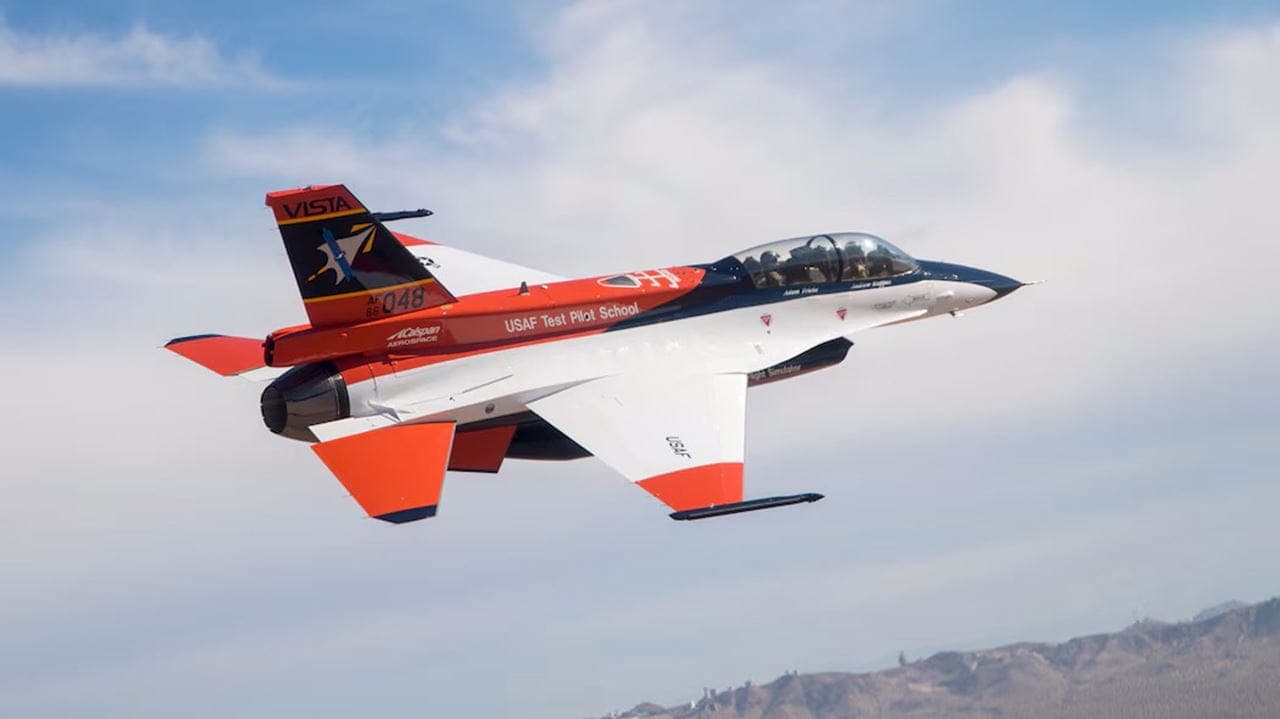
Raytheon, an RTX business, announced today that it has been awarded a contract by the U.S. Air Force to integrate its groundbreaking PhantomStrike radar onto the autonomous X-62A Variable In-flight Simulation Test Aircraft (VISTA). The X-62A, a modified F-16D Block 30 aircraft upgraded with Block 40 avionics, serves as a versatile test bed, combining autonomous flight capabilities with advanced machine learning algorithms and specialized software for next-generation air combat testing.
This milestone highlights Raytheon’s commitment to advancing radar technology and supporting the development of autonomous platforms that will play a critical role in maintaining U.S. air superiority.
PhantomStrike: Compact, Advanced, and Cost-Effective
The PhantomStrike radar represents a first-of-its-kind innovation in air-cooled, compact fire-control radar systems. Unlike traditional active electronically scanned array (AESA) radars, PhantomStrike is smaller, lighter, and requires less power, making it ideal for a wide range of platforms, including uncrewed aerial vehicles (UAVs), light-attack aircraft, and rotary-wing aircraft.
“Autonomous aircraft are poised to play a key role in helping the U.S. maintain air superiority, and Raytheon’s PhantomStrike radar is uniquely designed to help them do it,” said Dan Theisen, president of Advanced Products & Solutions at Raytheon. “This radar is revolutionary in its use of gallium nitride (GaN) technology, fully air-cooled design, and innovative manufacturing approach—all delivered at a lower cost than other modern radars.”
Advanced Capabilities for Modern Combat
PhantomStrike leverages cutting-edge digital beam forming and steering, multimode functionality, and interleaved ground and air targeting to provide exceptional situational awareness. Its design allows for superior radar performance while significantly reducing the size, weight, and power (SWaP) requirements typically associated with fire-control radars.
The radar’s versatility ensures it can be adapted for both autonomous and crewed platforms, providing critical targeting, tracking, and engagement capabilities in complex operational environments. By combining high performance with cost-effective manufacturing, PhantomStrike enables operators to equip a broader range of aircraft with advanced radar capabilities without the logistical and financial burden of traditional systems.
Supporting the Future of Autonomous Air Combat
The integration of PhantomStrike onto the X-62A VISTA underscores Raytheon’s role in pioneering technology for next-generation air warfare. Autonomous and optionally piloted aircraft are expected to become central to the U.S. Air Force’s strategy for air dominance, and radar systems like PhantomStrike provide the sensing, targeting, and situational awareness these platforms require.
By enabling high-performance radar functionality in a compact, power-efficient package, Raytheon is helping shape the future of air combat while maintaining affordability and adaptability for a wide range of aircraft types.
With this contract, Raytheon continues to demonstrate its ability to deliver innovative, mission-critical solutions that enhance both the capabilities of autonomous aircraft and the operational effectiveness of the U.S. Air Force.