Poland Declares Full Operational Capability for IBCS-Enabled WISŁA System
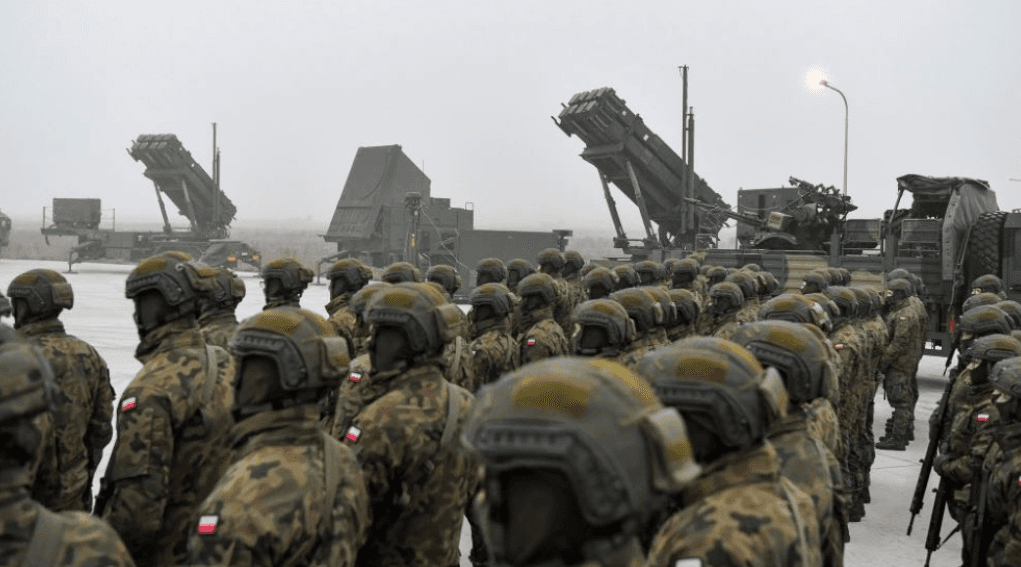
Poland has reached a historic milestone in its national air defense modernization, becoming the first U.S. NATO ally to declare Full Operational Capability (FOC) for the Integrated Battle Command System (IBCS) developed by Northrop Grumman Corporation. The announcement by Poland’s Ministry of National Defense marks the full operational readiness of the IBCS-enabled WISŁA medium-range air and missile defense system, significantly strengthening NATO’s eastern flank amid growing regional security challenges.
This achievement follows a successful international live-fire exercise that demonstrated IBCS’ ability to track, engage, and intercept airborne threats in real time—validating the system’s combat readiness and operational effectiveness.
WISŁA System Now Combat-Ready
With the declaration of FOC, Poland’s WISŁA program is now fully combat-capable. The system currently comprises two IBCS-enabled adapted Patriot sensors and launchers, designed to detect and neutralize a wide range of threats, including ballistic missiles, cruise missiles, and hostile aircraft.
At the heart of WISŁA’s effectiveness is multi-sensor data fusion, allowing operators to receive a unified, high-quality picture of the battlespace. Polish military crews have completed extensive training and certification, enabling them to independently operate and sustain the system—an important step toward national defense autonomy.
Strengthening NATO Interoperability and Collective Defense
IBCS fundamentally transforms how air and missile defense systems operate by enabling seamless interoperability across U.S. and NATO forces. Through its networked architecture, the system allows multiple nations to share sensor data, track threats cooperatively, and coordinate engagements in real time.
For NATO, Poland’s operationalization of IBCS establishes a layered and integrated air defense network along the alliance’s eastern frontier. This capability enhances collective deterrence, accelerates response times, and improves the alliance’s ability to counter increasingly complex and multi-vector threats.
Expanding Toward a National-Scale Shield
The WISŁA program is far from complete. The next phase will significantly expand Poland’s air and missile defense capacity by integrating eight IBCS-enabled batteries of adapted Patriot equipment. These upgrades will include additional launchers, interceptors, and advanced radar systems, forming a comprehensive, nationwide defensive shield.
Once fully implemented, the expanded WISŁA architecture will provide Poland with one of Europe’s most advanced integrated air and missile defense systems.
Growing Role for Polish Industry
Polish defense industry will continue to play a critical role in the program’s evolution. Plans include increased local assembly, maintenance, and production, strengthening Poland’s industrial base and long-term self-reliance. These efforts also open opportunities for Polish firms to participate in future international defense exports and allied programs.
A Revolutionary Approach to Air and Missile Defense
“Poland’s declaration of Full Operational Capability for IBCS showcases our ability to deliver interoperable defense solutions at scale with Poland, the U.S., and our allies,” said Kenn Todorov, vice president and general manager for command and control and weapons integration at Northrop Grumman. “This milestone reflects strong collaboration and delivers advanced capabilities to counter complex and evolving threats.”
IBCS represents a revolutionary approach to air and missile defense, unifying current and future systems regardless of source, service, or domain. Its network-enabled, modular, open, and scalable architecture fuses sensor data into a single, actionable operational picture—giving warfighters more time and better tools to assess and respond to threats.
Already in full-rate production, IBCS is fielded in Poland and slated for deployment across U.S. Combatant Commands in Europe and the Indo-Pacific, serving as a cornerstone of the U.S. Army’s integrated air and missile defense modernization strategy.